
France isn’t just about the Eiffel Tower and lavender fields. Hidden within its diverse landscapes lie some of Europe’s most spectacular lakes, each offering a unique blend of natural beauty, outdoor adventures, and peaceful retreats. From the pristine Alpine waters reflecting snow-capped peaks to volcanic crater lakes steeped in mystery, France’s lakes provide the perfect alternative to crowded beaches and bustling cities.
Whether you’re seeking adrenaline-pumping water sports, family-friendly swimming spots, or simply a tranquil place to reconnect with nature, these 15 remarkable lakes promise experiences that will stay with you long after you’ve returned home. Pack your hiking boots, grab your camera, and prepare to discover France’s best-kept aquatic secrets.
The French Alps: Pristine Alpine Jewels
Lake Annecy (Lac d’Annecy) – Europe’s Cleanest Lake
Nestled in the heart of the French Alps, Lake Annecy is nothing short of magical. With waters so crystal-clear you might mistake them for the Caribbean, this glacial lake has earned its reputation as Europe’s cleanest lake—a title it guards jealously through strict environmental regulations.
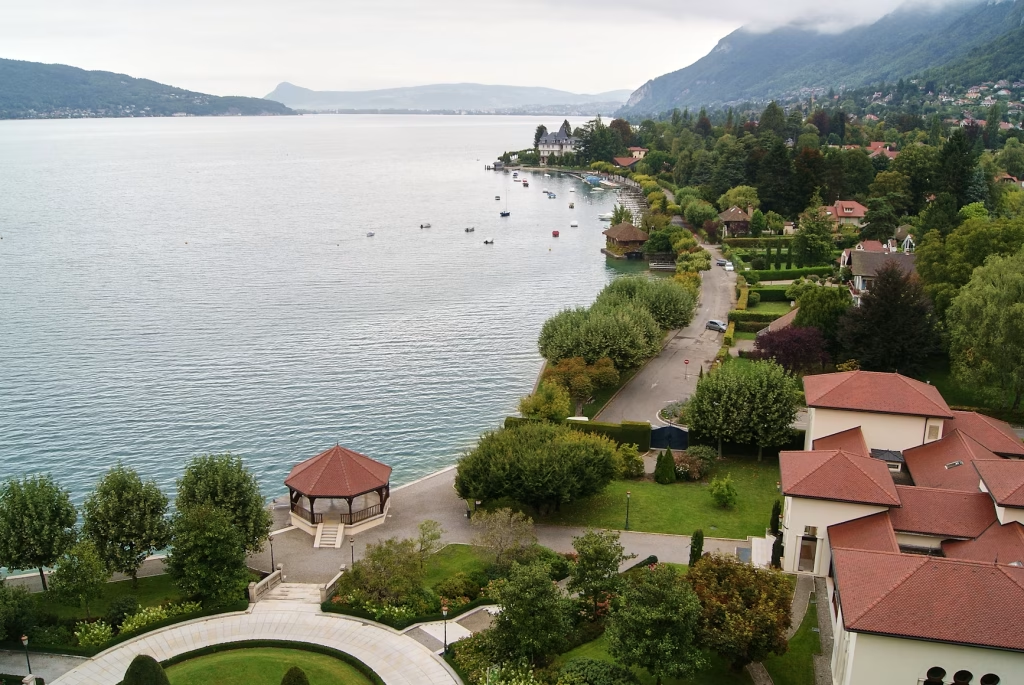
The medieval town of Annecy, often called the “Venice of the Alps,” serves as the perfect gateway to this aquatic paradise. Wander through its cobblestone streets, cross ancient bridges, and find yourself face-to-face with a lake that seems almost too beautiful to be real. The surrounding mountains create a natural amphitheater, their forested slopes plunging directly into waters that shimmer from turquoise to deep sapphire depending on the light.
What makes it special: Swimming here feels like diving into liquid crystal. The water is so pure that freshwater snorkeling and diving have become increasingly popular activities. Families flock to the numerous beaches, while adventure seekers embrace sailing, paddleboarding, and kayaking.
Perfect for: First-time visitors to the French Alps, families with children, water sports enthusiasts, and anyone seeking that quintessential Alpine lake experience.
Practical tip: Visit early morning or late afternoon to avoid crowds, especially during summer months. The paved lakeside path is perfect for cycling or leisurely strolls with stunning mountain views at every turn.
Find a hotel on Lake Annecy waterfront
Lake Bourget (Lac du Bourget) – France’s Largest Natural Glacial Lake
Stretching 18 kilometers through the Savoie region, Lake Bourget holds the distinction of being France’s largest natural lake by volume—a vast expanse of deep blue water that has inspired poets for centuries. At 145 meters deep, this ancient glacial lake creates its own microclimate, keeping waters pleasantly warm for swimming even as mountain peaks tower overhead.

The elegant spa town of Aix-les-Bains graces its eastern shore, where Belle Époque architecture meets modern wellness facilities. Here, thermal springs have been drawing visitors since Roman times, creating a unique destination where you can soak in healing waters while gazing across the lake toward the mysterious Abbaye d’Hautecombe on the opposite shore.
What makes it special: The lake offers an incredible diversity of experiences. You can explore Paleolithic sites classified by UNESCO, take romantic boat cruises to the abbey, or challenge yourself with everything from water skiing to underwater exploration. The surrounding Bauges Mountains provide a dramatic backdrop that changes with the seasons.
Perfect for: Spa enthusiasts, history buffs, couples seeking romance, and anyone who appreciates the combination of cultural heritage and natural beauty.
Practical tip: Take the boat to Abbaye d’Hautecombe—it’s one of the most scenic approaches to this historic monastery and offers unique perspectives of the lake you can’t get from shore.
Lake Geneva (Lac Léman) – Western Europe’s Largest Lake
Shared between France and Switzerland, Lake Geneva is a lake of superlatives. Covering 580 square kilometers, this vast inland sea creates its own weather patterns and supports a rich ecosystem that includes over 30 species of fish. The French shores offer a more intimate experience than their Swiss counterparts, with charming thermal towns like Évian-les-Bains and Thonon-les-Bains providing elegant bases for exploration.

What sets Lake Geneva apart is its incredible diversity of landscapes. One moment you’re admiring pristine beaches with white sand at Coudrée Bay, the next you’re exploring terraced vineyards that seem to cascade directly into the water. The lake’s sheer size means you can sail for hours without ever feeling confined, while its depth—reaching 310 meters—creates waters that shift from pale green to deep indigo.
What makes it special: This is where you’ll find some of Europe’s most sophisticated lake culture. Historic paddle steamers from the Belle Époque still ply the waters, connecting French and Swiss shores in style. The combination of mountain scenery, world-class wine regions, and international atmosphere creates an experience unlike any other French lake.
Perfect for: Sailing enthusiasts, wine lovers, those seeking luxury experiences, and travelers who enjoy the blend of French and Swiss cultures.
Practical tip: Consider the regional passes that offer unlimited travel between French and Swiss shores—they’re excellent value and allow you to experience the lake’s full cultural diversity.
Lake Aiguebelette – “The Emerald Pearl”
Hidden away just 10 kilometers from Chambéry, Lake Aiguebelette is Savoie’s best-kept secret. This natural lake owes its nickname “The Emerald Pearl” to waters that shimmer between deep green and turquoise—a result of unique geological conditions that create an almost tropical appearance in an Alpine setting.

What makes Aiguebelette truly special is its warmth. Protected by surrounding mountains and fed by thermal springs, it’s often called France’s warmest lake, with summer temperatures reaching a delightful 28°C. The absence of motorized boats maintains an atmosphere of tranquility that’s increasingly rare in our connected world.
What makes it special: This is nature’s own heated swimming pool. The lake’s warmth, combined with its protected status as a Natura 2000 site, creates ideal conditions for both human enjoyment and wildlife conservation. Rowing competitions are held here, taking advantage of the lake’s exceptional calm conditions.
Perfect for: Families with young children, swimming enthusiasts, nature lovers seeking peace and quiet, and anyone who wants to escape the crowds of more famous Alpine lakes.
Practical tip: Visit in early summer when the contrast between the warm lake and cool mountain air creates stunning morning mists that photographers dream of capturing.
Lake Serre-Ponçon – Artificial Paradise in the High Alps
Don’t let its artificial origins fool you—Lake Serre-Ponçon, created by damming rivers in the 1960s, has become one of the Alps’ most beloved aquatic playgrounds. This 28-square-kilometer expanse of crystalline blue water sits at 780 meters elevation, surrounded by peaks that soar above 3,000 meters.

The lake’s most enchanting feature is La Chapelle Saint-Michel, a medieval chapel that appears to float on the water—the last visible remnant of a village submerged during the lake’s creation. This poignant landmark adds an element of mystery to what is otherwise a thoroughly modern recreation destination.
What makes it special: Serre-Ponçon offers the perfect blend of high-altitude adventure and family-friendly facilities. The water stays refreshingly cool even in peak summer, while the surrounding landscapes provide access to some of the Alps’ most spectacular hiking and climbing routes.
Perfect for: Water sports enthusiasts, families seeking adventure, photographers captivated by mountain reflections, and anyone who appreciates how human engineering can create rather than destroy natural beauty.
Practical tip: The lake’s size means it can get choppy in afternoon winds—morning is the ideal time for paddleboarding and kayaking, while afternoons are perfect for sailing and windsurfing.
High-Altitude Alpine Gems: Where Sky Meets Water
Lac Blanc (Chamonix) – The Iconic Mont Blanc Viewpoint
Perched at 2,352 meters in the Aiguilles Rouges Nature Reserve, Lac Blanc offers what many consider the most spectacular mountain lake view in all of France. This isn’t just a lake—it’s a front-row seat to one of the world’s greatest mountain amphitheaters, where the Mont Blanc massif reveals itself in all its glory.

The journey to Lac Blanc is part of the magic. Whether you hike the challenging trail from Chamonix or take the cable car and chairlift combination, every step reveals new perspectives of Europe’s highest peak. When you finally reach the lake, the sight is breathtaking: crystal-clear waters perfectly reflecting the jagged spires of the Mont Blanc range, creating a natural mirror that doubles the visual impact.
What makes it special: This is hiking photography’s holy grail. The contrast between the small alpine lake and the massive mountain backdrop creates images that define the concept of “Alpine grandeur.” The lake sits on the famous Tour du Mont Blanc route, making it a pilgrimage site for serious hikers.
Perfect for: Experienced hikers, photography enthusiasts, Tour du Mont Blanc trekkers, and anyone seeking the ultimate Alpine experience.
Practical tip: Swimming is now prohibited to preserve the fragile ecosystem, but the Refuge du Lac Blanc offers refreshments with unbeatable views. Visit early morning for the best light and fewer crowds.
Lac d’Allos – Europe’s Highest Natural Lake
At 2,228 meters elevation, Lac d’Allos holds the impressive title of Europe’s highest natural lake. Nestled within Mercantour National Park, this glacial jewel requires effort to reach—but the reward is a pristine wilderness experience that few European destinations can match.

The lake occupies a spectacular cirque surrounded by peaks exceeding 2,800 meters. Its waters, fed by snowmelt and mountain springs, support populations of trout and Arctic char that have adapted to the extreme conditions. The surrounding alpine meadows burst with wildflowers in summer, creating a natural garden at altitude that seems almost impossible.
What makes it special: This is as close to untouched wilderness as you’ll find in France. The combination of extreme altitude, protected status, and challenging access ensures that visitors share the space with marmots, ibex, and golden eagles rather than crowds of tourists.
Perfect for: Serious hikers, wildlife enthusiasts, those seeking solitude in nature, and adventurers who appreciate earning their rewards through effort.
Practical tip: The hiking season is short—typically July through September. Check conditions with park rangers before setting out, as weather can change rapidly at this altitude.
Lac du Mont Cenis – Alpine Serenity Near the Italian Border
Straddling the historical route between Western Europe and Italy, Lac du Mont Cenis occupies a unique place in both geography and history. This artificial lake, created by damming the natural waters at 2,000 meters elevation, maintains the wild character of its high-altitude setting while offering easier access than many Alpine lakes.

The surrounding landscape tells stories of centuries of mountain trade and travel. Ancient paths still visible today once carried merchants and pilgrims between France and Italy, while the lake itself reflects a remarkable collection of alpine flora—some species found nowhere else in France.
What makes it special: The combination of historical significance and natural beauty creates a uniquely contemplative experience. The lake’s position near the Italian border offers glimpses into different mountain cultures, while its elevation ensures a genuine high-Alpine atmosphere.
Perfect for: History enthusiasts, botanists, cultural travelers interested in border regions, and those who appreciate the blend of human history and natural beauty.
Practical tip: The area is accessible by car in summer months, making it one of the more reachable high-altitude lake experiences. The nearby Fort de Ronce offers insight into the region’s strategic importance.
The Pyrenees: Wild Mountain Lakes
Lac de Gaube – Gateway to Vignemale Peak
Deep in the Pyrenees National Park, Lac de Gaube sits like a turquoise jewel in a setting of almost overwhelming natural drama. At 1,725 meters elevation, this glacial lake serves as the approach to Vignemale, the highest peak in the French Pyrenees, while offering its own spectacular rewards for visitors of all abilities.

The journey begins at the famous Pont d’Espagne, where waterfalls cascade through ancient forests along paths that have welcomed visitors since the 19th century. Writers like Victor Hugo and Charles Baudelaire found inspiration here, drawn by the raw power of mountain water and the sense of standing at the edge of truly wild country.
What makes it special: Lac de Gaube perfectly balances accessibility with wilderness experience. You can reach it via chairlift and a short walk, or challenge yourself with the full hiking experience from valley level. Either way, you’ll find yourself surrounded by glaciers, watching ibex and chamois navigate impossible cliff faces.
Perfect for: Families seeking mountain adventure, wildlife watchers, Pyrenees enthusiasts, and anyone who wants to experience glacial landscapes without extreme technical challenges.
Practical tip: The Hôtellerie du Lac de Gaube offers traditional mountain cuisine with views across the lake to Vignemale. It’s the only restaurant at the lake and operates seasonally, so check opening times before planning lunch there.
Lac d’Oô – The Magnificent 275-Meter Waterfall Lake
Hidden in the Luchon Pyrenees, Lac d’Oô presents one of the most dramatic lake settings in all of France. This artificial lake, created by an early 20th-century dam, is dominated by the spectacular Cascade d’Oô—a 275-meter waterfall that plunges from the cirque above in a gleaming veil of mist and spray.
The approach follows the famous GR10 long-distance path through the Val d’Astau, where grazing cattle and horses create pastoral scenes that contrast beautifully with the wild mountain landscape ahead. When the lake finally appears, framed by vertical cliffs and crowned by peaks exceeding 3,000 meters, the sight is genuinely breathtaking.
What makes it special: The combination of the massive waterfall and the intimate lake creates a sense of scale that’s both humbling and exhilarating. Despite being artificial, the lake has integrated perfectly into its natural setting, supporting local wildlife and maintaining the area’s wild character.
Perfect for: Waterfall enthusiasts, photographers seeking dramatic landscapes, families capable of moderate hiking, and anyone drawn to the raw power of mountain water.
Practical tip: The GR10 continues beyond the lake to even more spectacular scenery, including Lac d’Espingo and Lac Saussat. Consider extending your hike if conditions and energy levels permit.
Lac de Montbel – Family-Friendly Reservoir in the Foothills
Not all Pyrenean lakes require mountaineering skills to reach. Lac de Montbel, an artificial reservoir in the Ariège foothills, offers families and casual visitors the chance to experience Pyrenean beauty without extreme effort. This 570-hectare lake serves as a perfect introduction to the region’s natural wonders.
Surrounded by rolling hills rather than dramatic peaks, Montbel provides a gentler mountain experience while maintaining the clear waters and clean air that characterize the Pyrenees. The nearby village of Léran offers charming medieval architecture, while the lake itself supports various water sports and fishing opportunities.
What makes it special: This is the Pyrenees made accessible. Families can enjoy swimming, sailing, and lakeside picnics while still experiencing the authentic mountain atmosphere. The lake also serves as an excellent base for exploring nearby Cathar castles and historical sites.
Perfect for: Families with children, casual visitors to the Pyrenees, those seeking relaxation over adventure, and travelers interested in combining natural beauty with historical exploration.
Practical tip: The lake is easily accessible by car and offers good facilities including restaurants and boat rentals. It makes an excellent stopping point when traveling between the high Pyrenees and historical sites like Carcassonne.
Provence & Southern France: Turquoise Waters Under Mediterranean Sun
Lac de Sainte-Croix – The Verdon Gorge Masterpiece
Lac de Sainte-Croix is where Provence reveals its most spectacular secret. This artificial lake, created by damming the Verdon River, forms the gateway to the famous Gorges du Verdon—Europe’s answer to the Grand Canyon. The result is a stunning combination of turquoise waters, white limestone cliffs, and the lavender-scented landscapes that define the Provence of imagination.

What makes Sainte-Croix truly magical is how it transforms the dramatic gorge landscape into an aquatic playground. Electric boats glide beneath towering cliffs, while hidden beaches tucked into rocky coves offer intimate swimming spots. The medieval villages of Moustiers-Sainte-Marie and Sainte-Croix-du-Verdon provide perfect bases for exploration, their honey-colored stone buildings seeming to glow in the Mediterranean light.
What makes it special: This is where adventure meets relaxation in perfect harmony. You can kayak into the narrow gorges in the morning, enjoy a leisurely lunch at a village restaurant, and spend the afternoon swimming in crystalline waters surrounded by some of Europe’s most dramatic scenery.
Perfect for: Adventure seekers, families wanting variety, photography enthusiasts, and anyone who dreams of the quintessential Provence experience.
Practical tip: Visit in early summer when lavender fields around the lake are in bloom, creating one of France’s most photographed landscapes. Electric boats are required in parts of the lake to preserve the peaceful atmosphere.
Lac d’Esparron – Hidden Gem of Provence
Smaller and less famous than its neighbor Sainte-Croix, Lac d’Esparron offers a more intimate Provençal lake experience. This artificial reservoir, nestled between olive groves and limestone hills, provides the perfect escape from Provence’s sometimes overwhelming popularity. Here, you can experience the region’s natural beauty without fighting crowds for the perfect photo spot.
The lake’s emerald waters reflect ancient villages perched on surrounding hillsides, while hidden coves invite exploration by kayak or on foot. Swimming is particularly pleasant here, as the lake’s smaller size means waters warm quickly in the Mediterranean sun.
What makes it special: Esparron offers authentic Provence without the tourist crowds. You can explore at your own pace, discover local restaurants serving genuine regional cuisine, and experience the timeless rhythm of southern French life.
Perfect for: Those seeking authentic Provence, couples wanting romantic getaways, kayakers and swimmers, and travelers who prefer discovering hidden gems over visiting famous sites.
Practical tip: The village of Esparron-de-Verdon makes an excellent base, offering charming accommodations and restaurants while keeping you close to both the lake and other Provence attractions.
The Jura & Eastern France: Forest-Fringed Tranquility
Lac Genin – “The Little Canada of France”
Hidden in the Jura Mountains’ vast forests, Lac Genin has earned its nickname “The Little Canada of France” through a combination of pristine wilderness, crystal-clear waters, and an atmosphere of profound tranquility. This natural lake sits surrounded by ancient forests where the only sounds are birdsong and the gentle lapping of water against rocky shores.
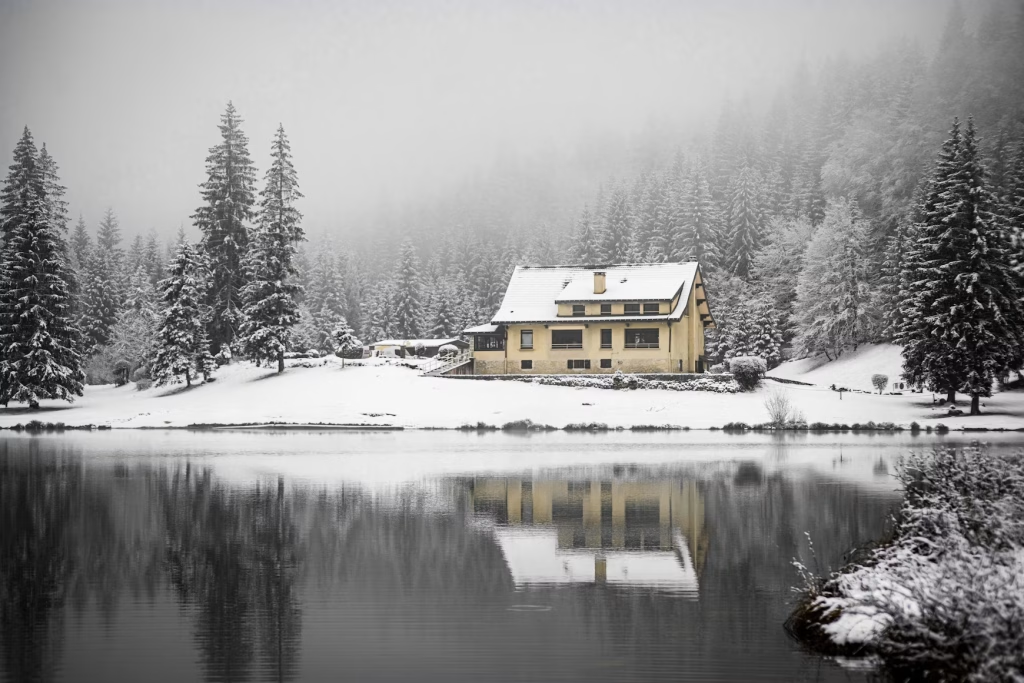
What makes Genin truly special is its incredible biodiversity. The surrounding wetlands and forests support rare plant species, including carnivorous plants that thrive in the unique bog conditions. In winter, when the lake freezes solid, it becomes a destination for ice diving—one of France’s most unusual and thrilling winter activities.
What makes it special: This is France’s answer to the Canadian wilderness experience. The combination of pristine forests, clear mountain water, and abundant wildlife creates a sense of being far from civilization despite relatively easy access.
Perfect for: Nature lovers, wildlife watchers, those seeking peaceful retreats, winter sports enthusiasts, and anyone who appreciates unspoiled natural environments.
Practical tip: The lake offers excellent facilities including a restaurant and hiking trails, but maintains its wild character. Visit in autumn for spectacular foliage, or in winter for the unique ice diving experience.
The Vosges & Massif Central: Ancient Volcanic Wonders
Lac Pavin – Mysterious Volcanic Crater Lake
Our journey ends at one of France’s most mysterious and beautiful lakes. Lac Pavin occupies a perfectly circular volcanic crater in the Auvergne region, its dark waters reflecting ancient legends and scientific wonder in equal measure. At nearly 1,200 meters elevation and 93 meters deep, this is a lake that has captured imaginations for centuries.

The lake’s volcanic origins create an otherworldly atmosphere enhanced by its remarkable depth and the ancient forests that surround it completely. Legend speaks of a drowned city beneath its waters, while scientists study its unique ecosystem and the rare gases that occasionally bubble up from its depths.
What makes it special: Pavin represents the mysterious side of French lakes. Its perfectly round shape, incredible depth, and dark waters create an almost mystical atmosphere that sets it apart from every other lake in France. The surrounding Chaîne des Puys landscape adds to the sense of being in a truly ancient place.
Perfect for: Those fascinated by geology and legends, hikers who appreciate unusual landscapes, photographers seeking dramatic natural subjects, and travelers drawn to places with mysterious atmospheres.
Practical tip: Swimming and boating are prohibited, but the hiking trail around the lake offers spectacular views and insights into volcanic geology. The nearby Puy de Sancy provides additional high-altitude hiking opportunities.
Planning Your French Lake Adventure
France’s lakes offer experiences for every season and every type of traveler. Summer brings warm waters perfect for swimming and water sports, while autumn paints the surrounding mountains in brilliant colors ideal for hiking and photography. Winter transforms high-altitude lakes into frozen wonderlands, and spring awakens the landscapes with wildflowers and rushing waterfalls.
Essential considerations:
- Altitude matters: High mountain lakes can be snow-covered well into June and may freeze again by October. Check local conditions before traveling.
- Respect the environment: These fragile ecosystems depend on responsible tourism. Follow marked trails, respect swimming restrictions, and leave no trace of your visit.
- Book accommodation early: The most scenic lakeside accommodations fill up quickly, especially during summer months and autumn foliage season.
- Consider the weather: Mountain weather can change rapidly. Always check forecasts and be prepared for sudden changes, especially at high-altitude lakes.
France’s lakes represent some of Europe’s most spectacular and diverse natural treasures. From the pristine Alpine waters reflecting snow-capped peaks to the mysterious volcanic lakes of the Massif Central, each offers its own unique blend of natural beauty, outdoor adventure, and peaceful retreat. Whether you’re seeking adrenaline-pumping activities or simply a quiet place to reconnect with nature, these remarkable destinations promise experiences that will inspire and rejuvenate long after you’ve returned home.
The memories you’ll create beside these pristine waters—watching sunrise paint the Alps in golden light, listening to waterfalls echo through ancient valleys, or simply floating in waters so clear you can see the bottom—will become treasures that last a lifetime. France’s lakes are calling. The only question is: which one will you visit first?


